

Plants are often introduced as a finishing touch, or sometimes not at all —something to “complete” a space once everything else is in place. But when considered from the outset, planting becomes part of the architecture itself: shaping how a space is experienced, how it flows, and how people feel within it.
In modern workspaces, this shift in thinking makes a noticeable difference.
Thoughtfully integrated planting can soften hard lines, bring a sense of rhythm and movement, and create natural moments of pause within busy environments. It can subtly define zones, guide circulation, and introduce a quieter, more human layer to otherwise structured interiors.
- Item number one
- Item number two
- Item number three
Beyond aesthetics, plants contribute to atmosphere.
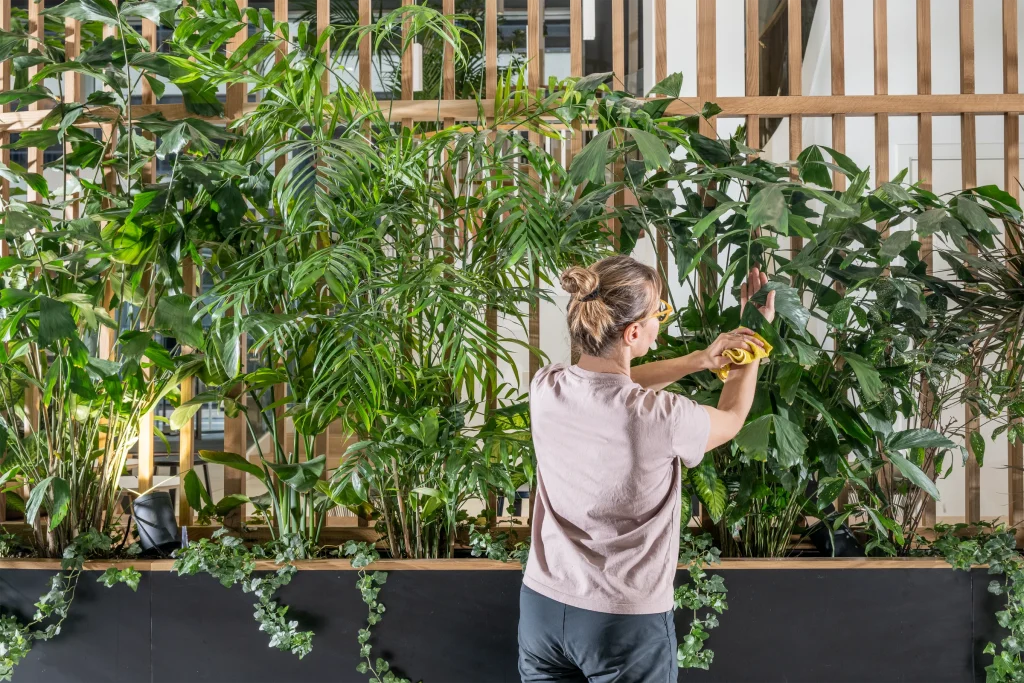
They can make spaces feel calmer, more welcoming, and more connected to the natural world—qualities that are increasingly valued in places where people spend much of their day. Even small, well-placed interventions can change the tone of a room, making it feel more balanced and considered.
- Item number one
- Item number two
- Item number three
Achieving this effect relies on a careful balance of placement, selection, and restraint.
Enhancing key features and quietly supporting the overall design. When approached with intention, plants stop being decoration and start becoming an integral part of the environment
The right plant in the right position will always have more impact than an abundance of poorly considered greenery. Scale, light, sightlines, and the surrounding materials all play a role in determining what will work best. Rather than overwhelming a space, planting should complement it bringing depth, softness, and a sense of life to the spaces we use every day.
Scale, light, sightlines, and the surrounding materials all play a role in determining what will work best. Rather than overwhelming a space, planting should complement it bringing depth, softness, and a sense of life to the spaces we use every day.
Antonio Soriano